How AI-Assisted RFQs Can Make Industrial Cleaning Projects Easier to Source
Industrial cleaning projects rarely begin with a perfect scope of work.
A plant manager may know a tank needs cleaned.
A municipality may know sludge needs removed.
A maintenance team may know it needs vacuum truck support during a shutdown.
A contractor may know a sewer line, pit, trench, or process area needs attention.
But knowing there is a problem is not the same as knowing exactly what information a qualified industrial service provider needs in order to evaluate the work.
That gap is one of the reasons IndustrialCleaningFinder.com was created.
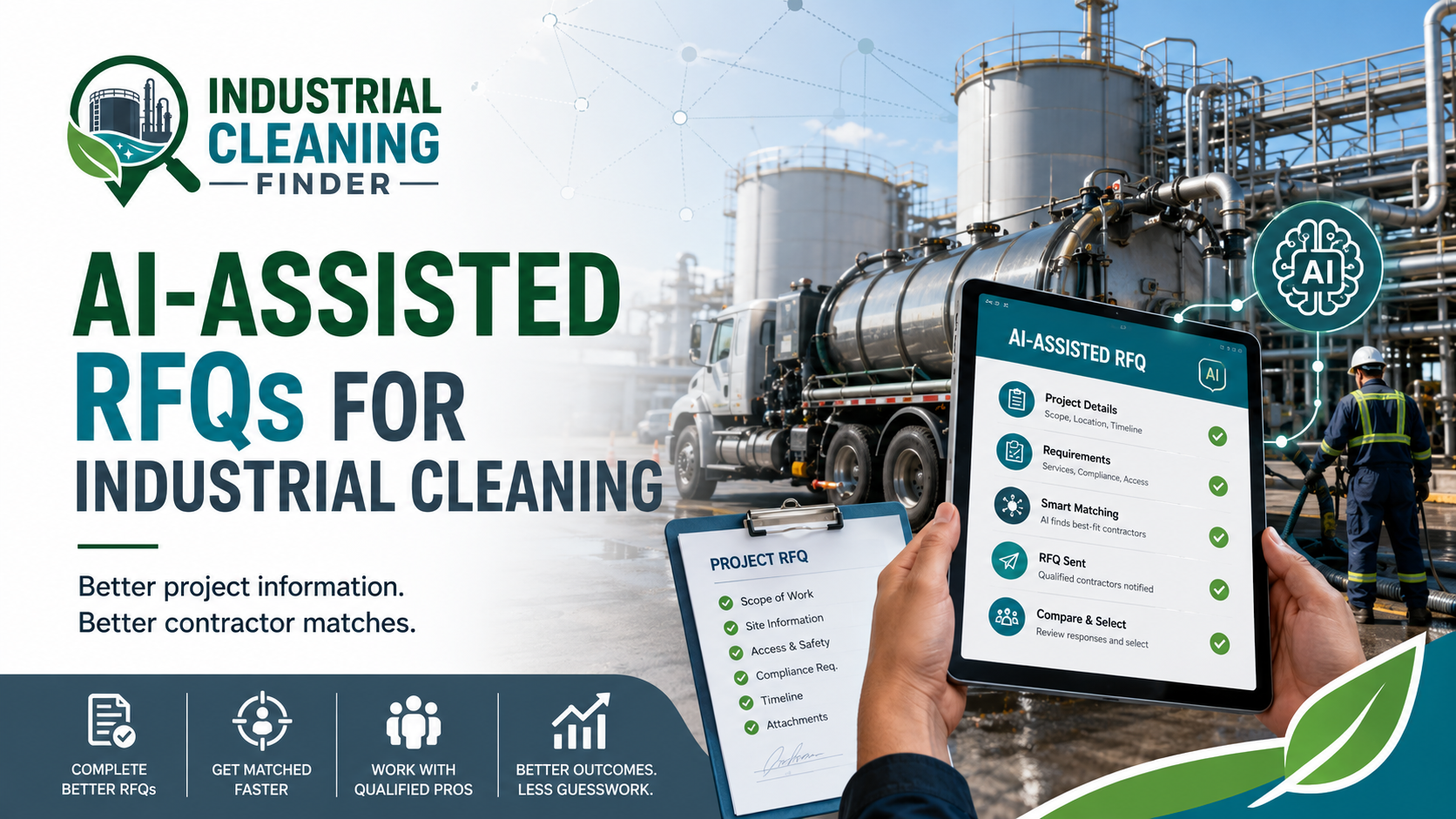
IndustrialCleaningFinder is an AI-assisted industrial service directory and RFQ platform designed to help buyers describe projects more clearly, identify the information contractors need, and route requests to relevant providers based on the work being requested.
The Problem With a Typical Industrial Cleaning RFQ
Consider a request that says:
“We need a wastewater pit cleaned this weekend.”
That tells a contractor very little.
Before determining equipment, crew size, schedule, disposal requirements, or even whether the contractor is a good fit, several questions may need to be answered.
What type of pit is it?
What material is inside?
How much material is present?
Is it hazardous or non-hazardous?
What is the distance from the work area to where the equipment can park?
Is confined-space entry required?
Is vacuum truck service required?
Does the material need to be transported off-site?
Is there an approved disposal location?
Does the facility require particular safety qualifications?
Is the work part of a scheduled shutdown?
Those details can significantly affect how the project is approached.
IndustrialCleaningFinder's RFQ intake is designed to help organize that information before the request is routed to contractors.
Start With the Asset
A strong industrial RFQ should first identify what needs to be cleaned or serviced.
That may include:
A storage tank
Process vessel
Wastewater pit
Sump
Clarifier
Lagoon
Sewer line
Trench drain
Stormwater line
Process piping
Vault
Manhole
Spill area
Other industrial equipment
The asset matters because different projects require different equipment and contractor capabilities.
Tank cleaning, for example, may involve sludge removal, confined-space entry, vacuum equipment, water blasting, transportation, and disposal.
Line jetting may involve completely different considerations, including pipe diameter, line contents, access points, isolation, wastewater handling, and downstream conditions.
Next: What Material Is Involved?
The material being removed or cleaned is one of the most important pieces of information in an industrial project.
A contractor may need to know whether the material is:
Water
Wastewater
Sludge
Oil
Product residue
Sediment
Solids
Chemical material
An unknown substance
A combination of liquids and solids
Material characteristics can influence equipment selection, handling procedures, PPE, transportation, disposal options, and regulatory requirements.
For emergency spill work especially, material identification is important before handling begins. Unknown or hazardous materials can require additional review before cleanup and transportation.
Estimated Volume Helps Contractors Plan the Job
One of the most common missing pieces in service requests is an estimate of how much material needs to be removed.
It does not always have to be exact.
But knowing whether a project involves 500 gallons, 5,000 gallons, or 50,000 gallons can completely change the approach.
Volume can affect:
Number and size of vacuum trucks
Number of loads
Crew size
Disposal requirements
Transportation costs
Project duration
Equipment staging
The ICF intake is designed to capture estimated volume alongside the asset and material so providers have a clearer starting point.
Access Conditions Matter More Than Many Buyers Expect
A vacuum truck cannot always park next to the work.
A tank may be inside a facility.
A pit may be behind equipment.
A sewer access point may be hundreds of feet away.
A project may require hose to run around buildings, across elevation changes, or through restricted areas.
Those conditions matter.
IndustrialCleaningFinder's intake helps capture access constraints so contractors can better determine the equipment and setup required.
Buyers should think about questions such as:
How close can the truck get?
How much hose might be required?
Is there vertical lift?
Are there restricted vehicle areas?
Are there narrow gates or weight limitations?
Can equipment remain on-site during the project?
Providing those answers earlier can reduce surprises once the crew arrives.
Safety Requirements Should Be Identified Early
Industrial cleaning frequently involves more than simply sending a truck and crew.
Projects may involve:
Confined-space entry
Gas monitoring
Ventilation
Rescue capability
Supplied air
Lockout/tagout
Facility-specific PPE
Site orientation
Special permits
Customer-specific safety qualifications
For confined-space cleaning, IndustrialCleaningFinder specifically highlights considerations such as gas monitors, ventilation equipment, retrieval systems, rescue equipment, and appropriate PPE or supplied air where required.
Capturing safety requirements during RFQ intake allows contractors to determine whether they have the qualifications and resources to safely perform the work.
Disposal and Offload Planning Should Not Be an Afterthought
Removing material is only part of many industrial cleaning projects.
The next question is:
Where does it go?
A project may involve:
On-site offload
Wastewater treatment
Approved disposal facilities
Recycling
Material recovery
Reuse opportunities
Temporary storage
Transportation to another facility
IndustrialCleaningFinder's RFQ process includes disposal and offload considerations as part of the scope-development process.
That is important because disposal can affect pricing just as much as the cleaning itself.
Transportation distance, waste classification, receiving-facility requirements, and load count can all influence total project cost.
AI-Assisted Does Not Mean AI Makes the Final Decision
This distinction is important.
IndustrialCleaningFinder may identify potential reuse, recycling, recovery, or disposal pathways based on information submitted through the project intake.
Those suggestions are planning tools.
They are not final approvals.
Potential reuse, recovery, recycling, or disposal options still need to be verified through appropriate material characterization, documentation, regulatory review, and receiving-facility approval before a shipment or disposal decision is made.
The goal of AI assistance is to help buyers ask better questions and consider options earlier—not to replace contractors, environmental professionals, laboratories, regulators, or receiving facilities.
Then ICF Helps Route the Request
Once the buyer provides the project details, IndustrialCleaningFinder uses the information to help identify relevant service providers.
The platform is designed to consider factors such as:
Service category
Location
Equipment and capabilities
Required qualifications
Project requirements
Contractor fit
ICF routes RFQs to qualified paid providers rather than simply broadcasting every request to every company in the directory.
That is an important distinction.
A tank-cleaning contractor should not have to sort through unrelated sewer-jetting projects.
A vacuum truck company should not receive every industrial cleaning request regardless of service area or equipment requirements.
The goal is better project information and better routing.
Why This Is Valuable for Industrial Buyers
For facility managers, municipalities, utilities, manufacturers, and contractors, the biggest benefit is simplicity.
Instead of trying to determine which contractors to call one at a time, the buyer can begin by describing the project.
The AI-assisted intake helps organize the information contractors need.
That can help produce:
Clearer project requests
Better contractor matches
Fewer repetitive questions
More productive pricing discussions
Better planning around safety and disposal
Faster identification of appropriate providers
The buyer does not need to already know which contractor is best.
The process begins with the job.
Why This Matters for Industrial Service Companies
The same system also creates a strong reason for contractors to build complete profiles.
If IndustrialCleaningFinder is helping buyers identify the contractor capabilities required for a project, then your company's profile needs to accurately show what your company can provide.
That may include:
Vacuum trucks
Air movers
Combination trucks
Hydroblasting equipment
Confined-space capabilities
Tank-cleaning experience
Line jetting
Sludge removal
Spill response
Transportation
Disposal support
Wastewater services
Geographic coverage
Safety qualifications
IndustrialCleaningFinder currently includes both approved and unclaimed contractor listings. Unclaimed listings display limited company information until the business verifies and claims the profile.
That makes complete contractor information increasingly important.
If a buyer's project requires a particular capability, IndustrialCleaningFinder needs enough information to understand that your company may be a fit.
The Future of Industrial Service Sourcing Starts With the Project
The traditional process often starts with a contractor list.
Call Company A.
Call Company B.
Send an email to Company C.
Wait for responses.
IndustrialCleaningFinder takes a different approach.
Start with the project.
What needs cleaned?
What material is involved?
How much is there?
What are the access conditions?
What are the safety requirements?
What happens to the material afterward?
What qualifications does the contractor need?
Once those questions are answered, finding the right industrial service provider becomes much easier.
That is what AI-assisted RFQ intake is intended to accomplish.
Need Industrial Cleaning Support?
Submit your project once through IndustrialCleaningFinder.com.
The AI-assisted intake helps organize your project details, identify important scope considerations, and support routing to relevant qualified providers.
If your company provides industrial cleaning, vacuum truck services, tank cleaning, hydroblasting, sludge removal, wastewater support, confined-space cleaning, line jetting, spill response, or related environmental services, make sure your profile accurately reflects your capabilities.
Get Listed. Get Found. Get Booked.
IndustrialCleaningFinder.com
The sister platform to HydroVacFinder.com